

10 min read
Founders underestimate customer support operations for Philippine apps until promos spike and chat queues explode. Support is not a cost center to minimize—it is a retention engine when instrumented with macros, escalation paths, and the same truth users see in the product.
Ticket taxonomy and root causes
Tag tickets consistently: payment failure, rider late, wrong item, account lock, safety concern. Weekly review top reasons—product ops should act on patterns, not anecdotes.
Voice of customer loop
Route top ticket themes into product backlog weekly. Support should have a seat at prioritization—otherwise you repeat the same pain.
Linking support to product and engineering
Weekly triage between support leads and PMs turns tickets into bugs with priority. Without this loop, the same failure mode burns agents for months.
Integrating support with analytics
Push ticket categories into product analytics to correlate with releases. Spikes after deploys signal regressions—catch them before board meetings do.
Tools, channels and self-service
Tools: help desk, CRM, and internal admin
Agents need unified timelines: orders, payments, chats, and refunds. If agents toggle five tabs, resolution time balloons.
Channel strategy: chat-first, but not chat-only
In-app chat keeps context attached to orders. Email works for paper trails finance needs. Phone remains essential for high-emotion safety issues—some users will not type during panic. Define which channels accept which issue types to prevent channel-hopping chaos.
Self-serve: status pages and FAQs
Reduce repetitive tickets with honest ETAs and clear refund policies. Self-serve fails when content is outdated—assign owners to update weekly.
Knowledge base that agents actually use
Write articles as answers, not policies. Include screenshots of admin tools and rider apps as they appear in production. Update articles within 24 hours of any policy change—stale help content generates repeat tickets.
Social escalation
Prepare workflows when users post publicly. Speed, facts, and calm tone matter—never argue in comments.
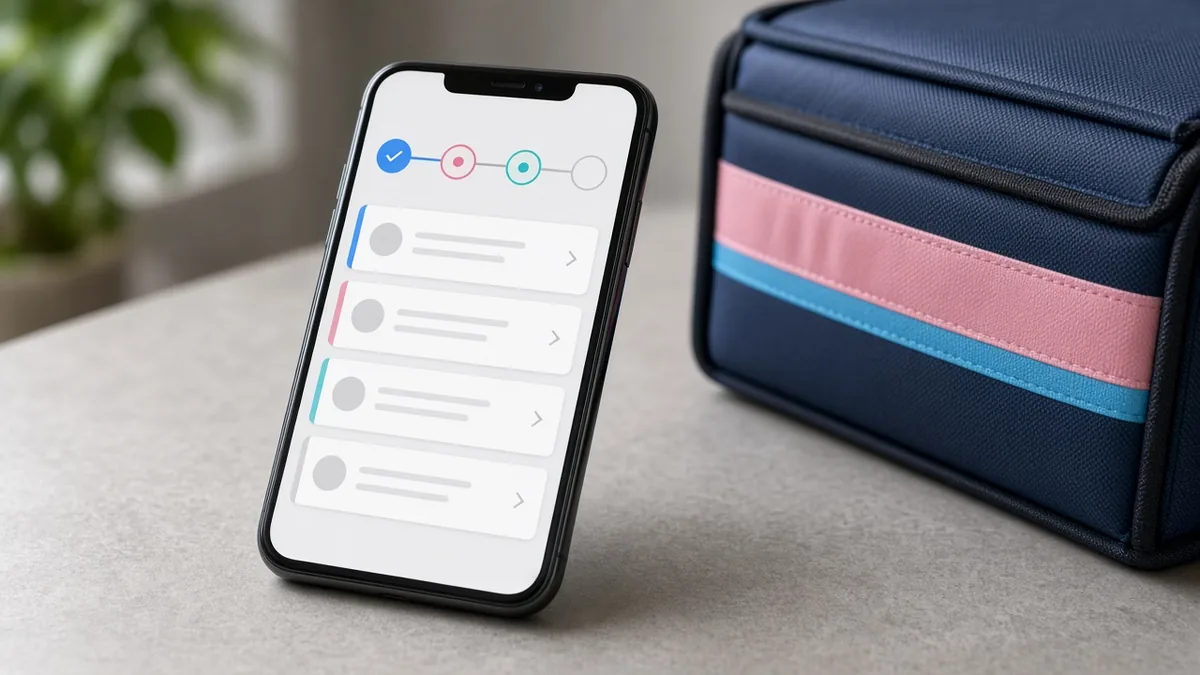
SLAs, staffing and workforce management
SLAs and staffing models
Define first-response and resolution targets by severity. Safety issues need faster escalation than “where is my voucher.”
Workforce management
Forecast staffing around peaks and weather. Understaffed nights destroy NPS.
Staffing math founders actually use
Estimate concurrent chats from peak trip volume and target response time. Add headroom for incidents—if your model assumes average days, rainy Fridays will break it.
Schedule team leads for overlap coverage; avoid single points of failure during holidays. Document handoffs so context survives shift changes.
Invest in internal tools: quick user lookup, order timeline, rider location (within policy), and refund actions with guardrails. Every extra minute an agent spends hunting data is margin burned.
Measure first-contact resolution and re-open rates. High re-opens mean your fixes are incomplete—or your policies are unclear.
Run monthly “voice of customer” summaries for leadership: three product fixes, three policy clarifications, three training updates. Small continuous improvement beats annual overhauls.
Plan for fraud and abuse in support channels: users attempting social engineering to get refunds. Train agents on verification steps without sounding accusatory.
Integrate legal escalation paths for safety incidents—agents should not improvise on liability.
Finally, celebrate wins—agents who turn angry users into loyal ones are revenue assets, not cost centers.
Outsourcing vs in-house
Outsourcing works with strong QA and clear scripts; in-house works when brand voice is nuanced. Hybrid is common—define boundaries.
Vendor evaluation for BPO partners
If you outsource, evaluate language quality, adherence to scripts, security training, and churn rates. Pilot for thirty days with strict QA sampling before scaling seats.
| Severity | Example | Target response |
|---|---|---|
| Critical | Safety incident, payment taken but no service | Immediate escalation |
| High | Order missing, rider no-show | Same shift |
| Medium | Wrong item, refund request | Within a business day |
| Low | Feature question, feedback | When capacity allows |

Macros, training and quality
Macros that do not sound robotic
Templates save time but should allow personalization. Users detect lazy copy—especially in Taglish contexts.
Macros library structure
Organize by intent: refunds, rider no-show, wrong address, voucher issues, account recovery. Tag macros by channel. Review quarterly for outdated promos or policy changes.
Training curriculum for new agents
Week one: product flows and empathy scripts. Week two: payment failure patterns common in PH wallets. Week three: de-escalation and fraud signals. Certification before solo shifts reduces mean time to incompetence.
QA for agents
Score random tickets weekly. Coaching improves quality faster than hiring alone.
Severity rubric starter
P0: safety or money movement broken with broad impact. P1: partial outage or payment degradation. P2: feature broken for subset. P3: cosmetic or non-blocking. Publish definitions so users and agents share vocabulary—reduces priority arguments.
Escalation ladders that protect users and staff
Tier 1 handles refunds within policy. Tier 2 handles edge cases with supervisor approval. Tier 3 includes ops leads for systemic incidents. Everyone should know when to stop debating and escalate—especially for safety.
Philippines-specific support realities
Peak hours follow local rhythms: lunch and dinner for food, rush hour for rides, payday weekends for ecommerce spikes. Staffing models must reflect Philippine holidays and weather—rain shifts demand and failure modes simultaneously.
Users often reach you through Facebook, X (Twitter), and TikTok—not only email. Omnichannel support is not luxury; it is where complaints go public first. Integrate social monitoring with your ticketing system so public posts become trackable tickets with owners.
Measuring support without gaming it
Measurement without gaming
Avoid metrics that encourage agents to close tickets prematurely. Pair CSAT with quality checks.
Sample weekly support review agenda
Minute zero: new incident summary and backlog age. Ten minutes: top five ticket themes with counts and week-over-week deltas. Twenty minutes: product bugs filed from support with severity. Thirty minutes: staffing plan for upcoming peaks. Forty minutes: training gaps identified from QA scores. Close with one owner per action item.
What investors ask about support
They ask about ticket volume per thousand transactions, cost per ticket, and trends—not vanity “we care about customers” statements. Prepare charts.
They ask how support informs product prioritization—show closed-loop examples.
They ask about safety escalation—prove you have processes, not heroics.
They ask about fraud and abuse—show controls.
Finally, they compare your metrics to category benchmarks—know yours cold.
Building a support-led product culture
In Philippine consumer apps, word-of-mouth and social proof move faster than ads. Every support interaction is a micro-brand moment: tone, speed, and fairness matter as much as your splash screen. Founders should treat support insights as product research with timestamps—because users vote with churn when issues repeat.
Start by mapping the full lifecycle of a ticket: intake, triage, research, resolution, follow-up, and root-cause tagging. If your tool cannot represent that lifecycle, you will optimize for “closed tickets” instead of “solved problems.” Closed tickets feel efficient; solved problems build retention.
Next, align incentives. If agents are judged only on handle time, they will optimize for shortcuts. Pair handle time with quality audits and customer outcomes—refund resolution correctness, repeat contact rate, and empathetic tone under stress.
Invest in bilingual and Taglish-friendly scripts where appropriate. Overly formal English can feel cold; overly casual copy can feel unprofessional. The right tone depends on your brand—document it.
Finally, connect support metrics to executive dashboards: not as a cost line only, but as a leading indicator of product health. Spikes in “payment failed” tickets after a release should trigger rollback conversations—not blame games.
Founder trap: founder-as-support
Early on, founders answer chats to learn. That habit must end with documented playbooks—otherwise fundraising and roadmap work stall while you answer “where is my rider?” at midnight forever.
Ninety-day plan to professionalize support
Days 1–30: implement ticket taxonomy, baseline response times, and weekly theme reviews. Ship top ten macros and a minimal knowledge base. Train agents on empathy and policy boundaries.
Days 31–60: integrate admin timelines, add QA sampling, and connect ticket spikes to release notes. Launch CSAT with short surveys—keep them lightweight.
Days 61–90: automate repetitive refunds within policy, add supervisor dashboards, and run a postmortem on any P0 incident. Document what you will do differently next quarter.
Throughout: keep founders out of routine tickets—founders should handle escalations and policy exceptions, not password resets.
Measure cost per successful resolution—not only cost per ticket—because reopens double work.
Build partnerships with product: support should attend sprint reviews when customer-impacting bugs backlog.
Invest in agent wellness: rotating shifts, mental health breaks after abusive chats, and clear escalation when users cross lines.
End state: support becomes a system that scales with trips—without proportional headcount growth forever.
Glossary for founders
CSAT: satisfaction score after a ticket. FCR: first contact resolution. QA: quality audits of sampled tickets. WISMO: “where is my order” volume—often a leading indicator of ops issues. SLA: contractual or internal time targets. Use consistent definitions so teams align.
When you review vendors for help desks, evaluate API quality, webhook reliability, and SSO—not only UI prettiness.
Also plan for seasonality: Christmas, payday weekends, and typhoon season can multiply ticket volume. Seasonal staffing and proactive status pages reduce panic tickets. If your marketing runs big promos, pre-brief support with scripts and refund authority—nothing erodes trust like “I need to ask my manager” during a mass outage.
Document everything you learn: every major incident should produce a short postmortem with action items and owners. Over a year, that library becomes your institutional memory—without it, you repeat the same crisis quarterly.
When you are ready to operationalize this at scale, ask your product partner for admin consoles that mirror user timelines, not screenshots—because support excellence is mostly tooling plus training, not motivational posters.
That is the full loop: measure reality, train people, improve product, repeat. Founders who treat support as strategy—not punishment duty—build brands that survive promos, outages, and competitors copying UI.
Now execute: pick one metric to improve next week, one macro to rewrite, and one product bug to file—small compounding improvements beat one big “support initiative” that dies in slides.
That execution discipline is how Philippine startups turn support from a cost center into retention infrastructure—measurable, improvable, and defensible in diligence.
Each week, look at top ticket drivers, bugs, and policy gaps—then ship one fix from each list. Word travels fast; a fast, fair process sticks more than polite replies alone.
The bottom line
Support excellence is a moat—especially in markets where word-of-mouth dominates acquisition.
Support is where brand promises meet reality. Invest in systems early—cheap tooling becomes expensive churn later.
Great support is invisible when things work—and unforgettable when things break. Build the boring systems: tags, timelines, training, and feedback loops. That is how Philippine startups turn users into advocates without buying love through endless promos. If you want implementation help, pair this article with on-demand app development Philippines and ask for admin tooling scope explicitly—because tooling is what makes humans scalable.
Frequently asked questions
How many support agents does an on-demand app need?
It depends on order volume, ticket rate per order and handling time. Measure those three numbers and plan for peaks such as promos and bad weather.
Should support be in-house or outsourced?
Many startups keep a small in-house team that owns quality and escalations, and add a BPO partner for volume once processes are documented.
Which channels should we offer?
Chat-first works for most apps, with a phone or call-back route for urgent and safety issues, and clear self-service answers in the app.
