
8 min read
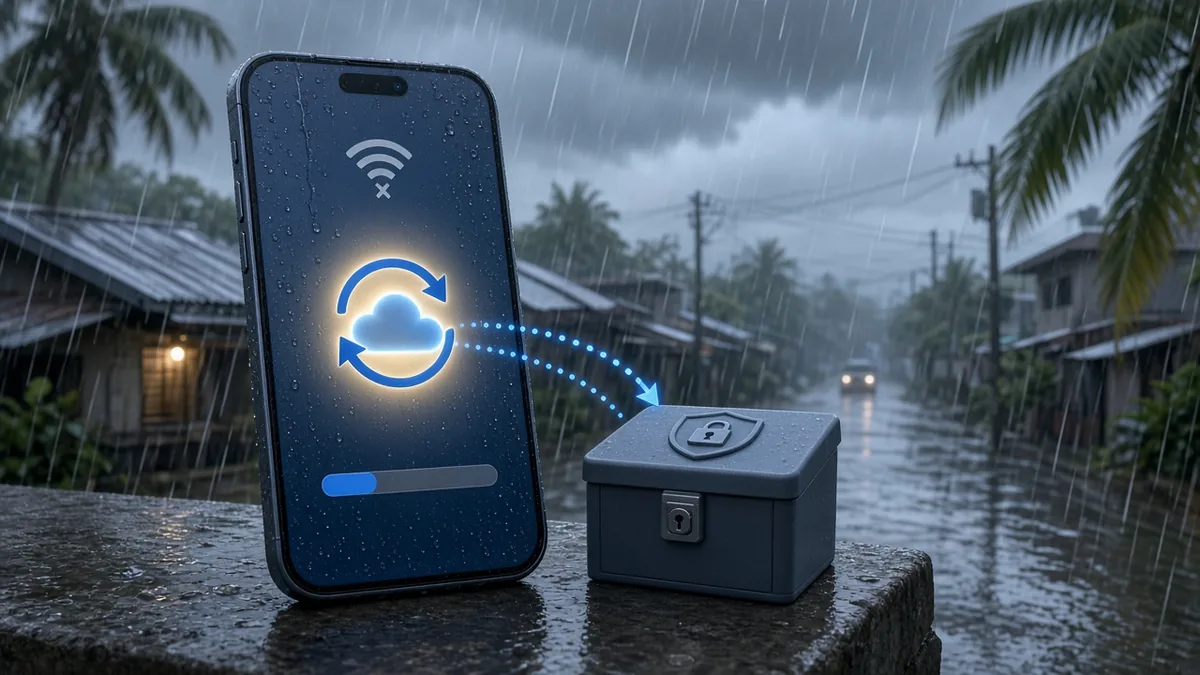
Philippine mobile networks vary block by block. Offline-first resilience is not a niche feature for on-demand apps—it is baseline UX: riders need navigation continuity, kitchens need order persistence, and users need clarity when connectivity drops.
What “offline” really means in the Philippines
Queue actions locally, sync idempotently, and show honest states (“saving…”, “will retry”). Hide failures behind spinners and users lose trust.
Philippines network diversity
Test on Globe, Smart, and DITO SIMs; test in basements and elevated roads. Your “works on my phone” is not a test matrix.
Rural and provincial expansion
Weaker infrastructure demands stronger offline UX and support expectations—plan accordingly.
Why offline UX is a trust strategy
Users do not blame the ISP when your app fails—they blame you. That is unfair, but it is market reality. Offline UX is how you communicate respect: “we know connectivity is imperfect, here is what we will do about it.”
Start with state machines drawn on paper—seriously. For each screen, list states: loading, ready, offline queued, conflict, failed, retrying, succeeded. If engineers cannot agree on states, users will not experience consistency.
Implement exponential backoff with jitter for retries—thundering herds hurt your servers and your users. Cap retries and surface manual retry options when automation fails.
Consider “read-only” modes for critical features: users can view order status even if they cannot place new orders—better than a blank screen.
Document sync semantics for support agents so they can explain delays credibly. Agents cannot defend what they do not understand.
| Network state | What users see | What the app should do |
|---|---|---|
| No signal | Nothing loads | Show cached data and queue actions |
| Weak / slow | Long waits, timeouts | Load essentials first, shorten payloads |
| Flapping | Requests fail and succeed randomly | Retry with backoff, avoid duplicates |
| Captive or limited data | Some sites blocked | Detect and explain clearly |
Maps, location and dispatch when the signal drops
Maps and location caching
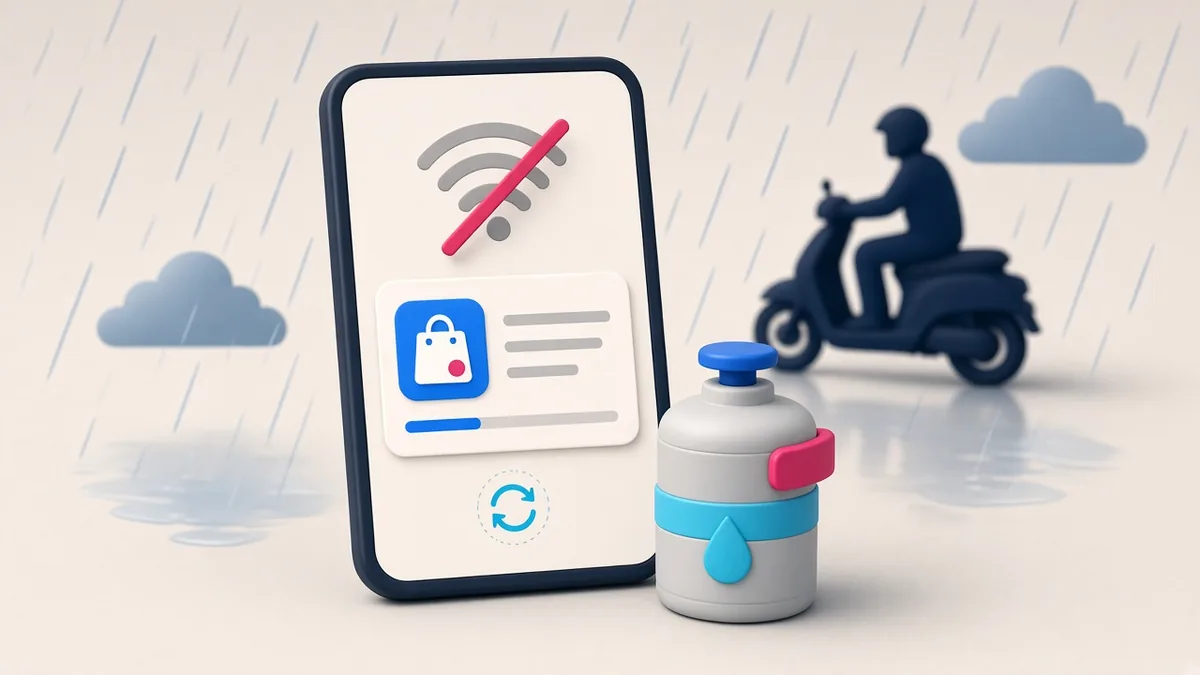
Cache last known good routes and pins. Provide manual fallbacks when GPS drifts—especially near malls and towers.
Operational playbooks for dispatch offline
Riders may accept trips offline; server reconciliation might reassign. Communicate reassignment clearly—riders tolerate truth; they do not tolerate silent changes to earnings.
Rider safety while offline
Ensure SOS flows attempt SMS fallback when data fails—test on real networks.
Kitchen and merchant tablets
Wi-Fi drops in malls and commissaries. Orders should persist locally and sync when connectivity returns—duplicate prints are better than lost orders.
Sync: retries, conflicts and optimistic UI
Messaging retries
SMS and push failures happen—design retries with backoff and user-visible status.
Conflict resolution after reconnect
When two devices disagree, your server must reconcile with clear rules—especially for payments and order states.
Sync conflict examples
Define precedence rules when offline edits collide—especially for assignments and status changes.
Designing optimistic UI without lying
Optimistic updates feel fast, but you must reconcile honestly when the server rejects a state. Show “pending confirmation” until the server acknowledges—especially for payments. Users prefer a short wait over a wrong confirmation.
Sync protocol checklist
Define ordering of events, server authority rules, conflict resolution matrix, retry backoff, dead-letter queue for poison messages, and admin tools to repair stuck states.
Engineering patterns that survive production
Use outbox pattern for reliable writes: local mutation writes to outbox table, sync worker processes in order, marks complete. Avoid “fire and forget” network calls for money-adjacent flows.
Version your entities—orders at version N should reject stale updates from version N-1 with clear user messaging.
Implement server time authority for timestamps—device clocks are unreliable.
Log sync failures with correlation IDs across client and server—debugging without correlation is guesswork.
Provide admin tools to replay stuck events safely after fixes.
Test upgrade paths: old app versions still in the wild must not corrupt server state.
Consider feature flags for risky sync changes—roll out gradually by percentage or city.
Balance battery: batch uploads when plugged in and on Wi-Fi when possible—transparently.
Payments: never double-charge
Payment safety: never double-charge
Idempotency keys for charges are mandatory. When sync replays, finance must see one charge—not two.
Offline and payments—never compromise
Never cache full PAN or CVV. Tokenize. If you handle wallets, follow provider guidance on client-side storage strictly.
For cash-on-delivery flows, offline confirmation must reconcile with rider cash collection—define authority and audit trails.
When users see “payment pending,” explain whether retry is safe—double charges destroy trust faster than slow UX.
Implement server-side idempotency keys generated per checkout session—clients can retry safely.
For marketplace payouts, offline rider earnings should accumulate locally but reconcile with server totals nightly—disputes require authoritative numbers.
Run chaos tests: kill API mid-payment, restore, verify single ledger entry.
Document incident playbooks for payment provider outages—users will ask if their money is safe.
Your CFO and your CTO should agree on money semantics—misalignment becomes user-facing bugs.
Storage, security and battery
Local storage encryption and secrets
Cached tokens and PII on device need encryption at rest. Lost phones happen—design session revocation and remote logout paths.
Client-side storage limits
Plan eviction policies for cached trips and messages—devices fill up; your app should degrade without crashing.
Battery impact
Background location and retries can drain batteries—profile aggressively on mid-range Android.
Testing and monitoring under bad networks
Testing under bad networks
Use network link conditioners and real device drives across cities. Lab Wi-Fi is not reality.
Field testing methodology
Ride along with riders and sit in kitchens. Watch where taps fail, where loading states confuse, and where staff improvise workarounds—those are your highest ROI fixes.
QA scenarios for flaky networks
Toggle airplane mode mid-checkout, mid-trip, and mid-payout. Kill server mid-sync. Rotate SIMs. Automate where possible.
Telemetry
Measure offline queue depth and sync failure rates—optimize what you measure.
Observability for sync health
Dashboards: queue depth, oldest unsynced event age, sync error categories. Alert before users notice.
Checklist before you claim “offline-first”
Conflict resolution documented. Idempotency on money flows. Retry limits defined. User-visible states for all long operations. Admin repair tools exist. Support trained. Load tested under flaky networks. Privacy reviewed for cached location.
If any box is unchecked, you are beta testing on paying users.

Helping users understand offline states
Explain offline limitations plainly—users forgive honesty faster than silent failures.
Glossary for founders
Idempotency: repeating an operation does not duplicate side effects. Outbox pattern: reliable local queue before server confirmation. Conflict resolution: rules when two edits disagree. Backoff: retry delays to avoid storms.
Teach these terms to PMs and support leads—shared vocabulary reduces shipping bugs.
Also plan for device diversity: low RAM phones, aggressive OEM battery killers, and outdated OS versions. Offline-first must not assume flagship hardware—test on the phones your riders actually use, bought from local retailers, not only from developer labs.
Finally, align legal and product on what location data you retain for disputes—retain enough to resolve issues, not so much that privacy risk balloons. Good policy plus good engineering beats ad-hoc exports when lawyers ask questions.
If you implement offline-first well, users experience your brand as dependable—the rarest feeling in crowded on-demand markets. That dependability becomes retention, and retention becomes the only sustainable CAC strategy over time.
Keep iterating: every network failure is a lesson—if you log it, tag it, and fix the top root causes, your product becomes antifragile where competitors only patch symptoms.
Ship a resilience roadmap alongside your feature roadmap—because in the Philippines, networks will test you sooner than your competitors will.
Make resilience a release criterion: if sync fails under realistic tests, the build does not ship—same as payments.
Keep testing—networks change, and the app has to keep up.
The bottom line
Resilience is a product feature—users reward reliability with repeat usage.
Resilience is how you earn trust when networks fail—which is often. We help teams design sync semantics, admin visibility, and recovery UX that match real operations.
Offline-first is discipline: honest UX, strict server rules, and relentless field testing across Philippine conditions.
Offline-first is not a library—it is a product philosophy. In the Philippines, networks will fail at the worst times: paydays, storms, concerts. Your users will blame your brand unless you prepared honest UX, strict server rules, and support scripts that match reality. Ship resilience as a feature alongside your first promo—because promos amplify failures. For related architecture discussions, see startup MVP tech stack Philippines and insist on sync semantics in your technical specs—not only screen designs.
Frequently asked questions
What does offline-first mean for an on-demand app?
The app keeps working usefully when the connection is weak or lost—showing cached information, saving actions locally and syncing safely when the connection returns.
Can payments work offline?
Payments themselves need a connection to be confirmed. The app should save the intent safely and confirm only after the server or gateway responds.
How do we test bad networks?
Use network throttling tools, real phones on different carriers and field tests in areas where your riders and customers actually work.
